Sunday, July 10, 2016

Saturday, July 2, 2016
Week 2: MedTech + Art
When
mixed with medical technology, art seems to have a much more personal effect
with the body and self. A person looking at an abstract painting may feel some
connection to the shapes and lines being shown. However, the experience is substantially
different when the art is affecting a person physically.

The inside of a head from one of the Body World exhibits (4).
In my
own personal experience, I saw the exhibition of Body Worlds when it came to
the Bay Area several years ago. The art was surreal since the gallery was using
actual bodies through plastination. Even though it was not necessarily me
surrounded by glass and watchful eyes, it made me reflect on my own body and
what my internal self really looks like. In many ways, it was similar to
Casini’s idea of looking into a mirror. Although he was talking about MRIs, the
same concept can be applied here. In my mind, I was taking that image of the
person and seeing my own self in that body.
The process of the plastination technique used for the Body Worlds exhibit (1).
This
idea of the self in association to medical technology and art also explains why
many people hid their faces during Orlan’s live surgeries during the 1990’s. A
woman in the documentary comments on how the audience reacted with horror to
the performance even though they see and hear about so much violence on
television. The experience is different, though, because many people are
imagining themselves in Orlan’s situation and reacting to her face being sliced
open. This phenomena is typically known as pain empathy (3), and the
effects can be found in many recent movies such as 127 Hours (5). Most likely, this feeling is found in art with
medical technology due to the fact that the body is a commonly used medium in
this art form.

This is a photograph of Orlan during one of her live surgeries (3).
By
bringing this type of self-reflection into art, medical technology can also be
beneficial to a person. Diane Gromala uses virtual reality to treat pain by
having the environments react to a person’s responses, while Virgil
Wong creates apps to show one’s digital persona in the future in order to curb
bad habits. In both cases, people are changing themselves for the better
based on a visual stimulus. These technologies are again acting like mirrors
for the users with the stimuli representing the people themselves.

Virgil Wong is creating a digital persona to show a person's age based on health characteristics (2).
1. Casini, Silvia. Magnetic Resonance Imaging (MRI) as MIrror and Portrait: MRI Configurations between Science and the Arts. N.p.: Johns Hopkins UP and the Society for Literature and Science, 2011. Print.
4. Orlan - Carnal Art (2001). Dir. Stephan Oriach. Perf. Orlan. YouTube. Myriapodus Films, 13 Mar. 2011. Web. 1 July 2016. <https://www.youtube.com/watch?v=no_66MGu0Oo>.
8. Vesna, Victoria. "Medicine Part 3." YouTube. uconlineprogram, 22 Apr. 2012. Web. 1 July 2016. <https://www.youtube.com/watch?v=FIX-9mXd3Y4>.
9. Virgil. Virgil Wong, n.d. Web. 2 July 2016. < http://virgilwong.com/>.
2. Digital image. Virgil. Virgil Wong, n.d. Web. 2 July 2016. <http://virgilwong.com/research/>.
Through these observations, medical
technology appears to be bringing the art world closer to one’s own identity.
Sources:
1. Casini, Silvia. Magnetic Resonance Imaging (MRI) as MIrror and Portrait: MRI Configurations between Science and the Arts. N.p.: Johns Hopkins UP and the Society for Literature and Science, 2011. Print.
2. Gromala, Diane. "TEDxAmericanRiviera - Diane Gromala -
Curative Powers of Wet, Raw Beauty." TEDxAmericanRiviera. YouTube. TEDx
Talks, 7 Dec. 2011. Web. 1 July 2016.
3. Inglis-Arkell, Esther. "This Is How You Literally Feel Other People's Pain." io9. Gizmodo, 11 July 2014. Web. 2 July 2016. <http://io9.gizmodo.com/this-is-how-you-literally-feel-other-peoples-pain-1603076553>.
4. Orlan - Carnal Art (2001). Dir. Stephan Oriach. Perf. Orlan. YouTube. Myriapodus Films, 13 Mar. 2011. Web. 1 July 2016. <https://www.youtube.com/watch?v=no_66MGu0Oo>.
5. Rossen, Jake. "7 Movies That Sent People Running Out of
Theaters." Mental Floss. Mental Floss Inc., 2 Oct. 2015. Web. 2 July 2016.
<http://mentalfloss.com/article/69377/7-movies-sent-people-running-out-theaters>.
6. TEDxAmericanRiviera - Diane Gromala - Curative Powers of
Wet, Raw Beauty. Perf. Diane Gromala. YouTube. TEDx Talks, 7 Dec. 2011. Web. 1
July 2016. <https://www.youtube.com/watch?v=cRdarMz--Pw>.
7. Vesna, Victoria. "Medicine Part 1." YouTube. uconlineprogram,
21 Apr. 2012. Web. 1 July 2016. <https://www.youtube.com/watch?v=Ep0M2bOM9Tk>.
8. Vesna, Victoria. "Medicine Part 3." YouTube. uconlineprogram, 22 Apr. 2012. Web. 1 July 2016. <https://www.youtube.com/watch?v=FIX-9mXd3Y4>.
9. Virgil. Virgil Wong, n.d. Web. 2 July 2016. < http://virgilwong.com/>.
Images/Videos:
1. BODY WORLDS - The Plastination Technique. YouTube. Body
Worlds, 27 Aug. 2013. Web. 2 July 2016. <https://www.youtube.com/watch?v=Q_8ZEW2CGKo>.
2. Digital image. Virgil. Virgil Wong, n.d. Web. 2 July 2016. <http://virgilwong.com/research/>.
3. N.d. English 114EM: Women Writers, 1650-1760. By Denee
Pescarmona. 2003. Web. 2 July 2016.
<http://oldsite.english.ucsb.edu/faculty/ecook/courses/eng114em/surgeries.htm>.
4. N.d. Pinterest. Pinterest. Web. 2 July 2016. <https://www.pinterest.com/valeanette/gunther-von-hagensbody-worlds/>.
Thursday, June 30, 2016
Week 2: Robotics + Art
It
cannot be argued that industrialization has changed the way that art is viewed
and formed. From computers to robots, the way art is viewed today is not like
how it was viewed a hundred, fifty, or even ten years ago. However, there are
those such as Walter Benjamin who believe that art is losing its so-called
“aura”, tradition, and uniqueness from these new advances (1). Although mass
production has caused the traditional aspect to decline somewhat, it does not
mean that this new age of art has loss anything special. Instead, it is just
evolving like everything else in life.


The changing paradigm of art from traditional to digital (1).
Film is
one way in which art has evolved. Duhamel has criticized movies as “a spectacle
which requires no concentration and presupposes no intelligence” (1), but
he seems to forget one critical element of art: emotion. Art may want people to
think; however, it really wants them to feel as well. There are even studies
from functional MRIs that show art eliciting emotions (2). Whether it be
through thought or emotion, art is supposed to be something impressionable that
people can take with them. Films do that in their very own way.

Films can elicit emotions similar to that of traditional art (2).
A great example that mixes the
concepts of emotion, art, robotics, and film together is Disney’s Big Hero 6 (2015). It has both a
touching story along with an innovative robot design found in Baymax. In fact,
people working on the movie mainly based Baymax’s design on a developing technology
called soft robotics at Carnegie Mellon University (4). By showing these
new technologies through animation, this film is bringing robots and art even
closer together. Much akin to Professor Kusahara’s description of a friendly
humanoid robot, Baymax also shows a positive side to robots that is typically
found in Japanese culture. In many respects, this viewpoint is displaying the
pros of industrialization and robotics rather than the cons found in earlier
movies like Fritz Lang’s Metropolis
(1927). Despite what critics say, Big
Hero 6 is art by captivating the
audience’s hearts with the story and their imaginations with the robots.
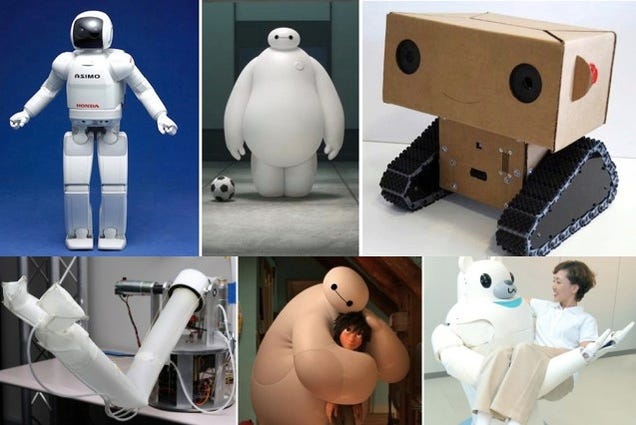
Baymax from Big Hero 6 was inspired by actual robot designs and concepts (3).
Even though art is evolving, it is not
replacing traditional art entirely. To this day, many people “still bid wildly
at auctions and employ armies of scholars to find the ‘original’,” (3). Art tends to utilize computer-generated animations or robots nowadays, but it is still considered art as long as it can convey meaning to the audience.
Sources:
1. Benjamin, Walter. The Work of Art in the Age of Mechanical
Reproduction. N.p.: n.p., 1936 Print.
2. Clark, Josh. "Why Do Music and Art Move Us?" How Stuff Works. InfoSpace LLC, 13 Sept. 2010. Web. 30 June 2016. <http://science.howstuffworks.com/life/music-and-art-move-us1.htm>.
2. Clark, Josh. "Why Do Music and Art Move Us?" How Stuff Works. InfoSpace LLC, 13 Sept. 2010. Web. 30 June 2016. <http://science.howstuffworks.com/life/music-and-art-move-us1.htm>.
3. Davis, Douglas. “The Work of Art in the Age of Digital
Reproduction (An Evolving Thesis: 1991-1995).” Leonardo 28.5 (1995): 381-386. Web. 29 June 2016.
4. Davis, Lauren. "How Disney Will Make You Cry Again With
Big Hero 6." io9. Gizmodo, 3 Sept. 2014. Web. 29 June 2016. <http://io9.gizmodo.com/how-disney-will-make-you-cry-again-with-big-hero-6-1630115219>.
5. Kusahara, Machiko. "Robotics Machiko Kusahara 1."
YouTube. uconlineprogram, 14 Apr. 2012. Web. 29 June 2016. < https://www.youtube.com/watch?v=xQZ_sy-mdEU>.
6. Vesna, Victoria. "Robotics Part 2." YouTube. uconlineprogram, 15 Apr. 2012. Web. 29 June 2016. <https://www.youtube.com/watch?v=oAZ8bo9T_Pk>.
6. Vesna, Victoria. "Robotics Part 2." YouTube. uconlineprogram, 15 Apr. 2012. Web. 29 June 2016. <https://www.youtube.com/watch?v=oAZ8bo9T_Pk>.
Images:
1. Kevin. Traditional-art vs Digital-art. Digital image.
Deviant Art. Deviant Art, n.d. Web. 30 June 2016. < http://chukadrawer.deviantart.com/art/traditional-art-vs-digital-art-181779589>.
2. N.d. Today. By A. Pawlowski. NBC News, 2 Nov. 2014. Web. 30
June 2016. <http://www.today.com/health/your-brain-movies-why-films-make-us-cry-flinch-cheer-1D80258284>
3. Walker, Alissa. Robots that Inspired Big Hero 6. Digital image. Gizmodo. Gizmodo, 6 Nov. 2014. Web. 30 June 2016. <http://gizmodo.com/8-real-life-robots-that-inspired-big-hero-6-1643663925>.
Sunday, June 26, 2016
Week 1: Math + Art
Although science is largely based off of mathematics, art is typically
not associated with math in the same way. However, as this week has shown, math
and art are much more connected than I had previously thought.
Take the golden ratio for example. This mathematical concept has played a major role in architectural achievements such as the Parthenon and the pyramids of Giza. Moreover, it can be found in nature. Most notable examples include shells or plants, but it can also be seen in the small structures of DNA and in the vast spiral galaxies of the universe. With the discovery of this ratio, artists had the ability to use this harmony found from nature and math in their own works.
Take the golden ratio for example. This mathematical concept has played a major role in architectural achievements such as the Parthenon and the pyramids of Giza. Moreover, it can be found in nature. Most notable examples include shells or plants, but it can also be seen in the small structures of DNA and in the vast spiral galaxies of the universe. With the discovery of this ratio, artists had the ability to use this harmony found from nature and math in their own works.

(http://memolition.com/2014/07/17/examples-of-the-golden-ratio-you-can-find-in-nature/)
Often times, math helps to shape the way
artists perceive their world. For instance, before al-Haytham’s Book of Optics,
art was drawn flat without much depth. However, the introduction of the
vanishing point caused a new renaissance of art being more realistic,
three-dimensional, and detailed. Leonardo’s Da Vinci’s The Last Supper illustrates
this point by making the painting feel lifelike. The use of vanishing point
enhances the focus of Jesus at the center. The Last Supper is also an important
piece for its use of golden ratio, creating the natural harmony as noted
earlier. It is iconic as it is fundamental in showing how natural elements and
mathematics can be used to improve what the artist wants to convey.

Da Vinci's The Last Supper uses both the golden ratio and the vanishing point.
(http://www.artmumble.com/2012/02/single-vanishing-point-in-leonardo-da.html, http://www.goldennumber.net/art-composition-design/)
Beyond 2D and 3D perspective, math has also helped to
explain the fourth dimension. As Abbott’s Flatlands shows, the fourth dimension
can be argued by “the Argument of Analogy of Figures”. Even if it cannot be
seen in the real world, it can be imagined in a metaphysical one. This idea
would eventually find a scientific answer in Einsteinian relativity to create
“four-dimensional images of an intricacy and accuracy never dreamed of”
(Henderson), but this by no means made the artists’ contribution insignificant.
Just the thought of the fourth dimension helped to shape new forms of art like
cubism.
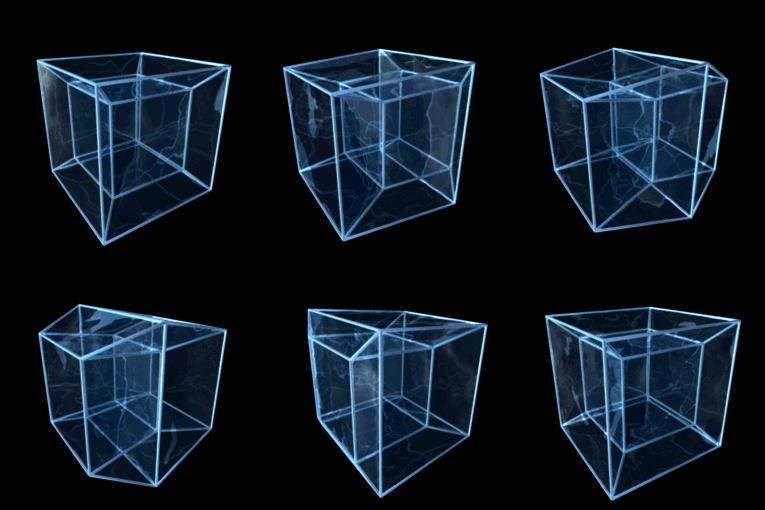
(https://en.wikipedia.org/wiki/Tesseract)
Alone, math is just a set of numbers and calculations.
However, it has become an essential tool for the arts and the sciences. Without
it, art and science would be stagnate and unchanging. In the end, I realize
that math improves these two disciplines to constantly reach new heights by
finding hidden meanings within the world.
Sources:
Abbott, Edwin A. Flatland: A Romance of Many Dimensions. 1884. Print.
Da Vinci, Leonardo. The Last Supper. 1495-1498. ArtMumble.com. 13 Mar. 2012. Painting. 25 June 2016. <http://www.artmumble.com/2012/02/single-vanishing-point-in-leonardo-da.html>.
"Examples of the Golden Ratio You Can Find in Nature." Memolition. 2014. Web. 25 June 2016. <http://memolition.com/2014/07/17/examples-of-the-golden-ratio-you-can-find-in-nature/>.
Frantz, Marc.
Lesson 3: Vanishing Points and Looking at Art. 2000. Print.
Henderson, Lynda. “The Fourth Dimension and Non-Euclidean Geometry in Modern Art.” Leonardo 17.3 (1984): 205-210. Web. 25 June 2016.
Meisner, Gary. "Golden Ratio in Art Composition and Design." Phi 1.618: The Golden Number. 4 May 2014. Web. 24 June 2016. < http://www.goldennumber.net/art-composition-design/>.
Tesseract. Digital image. Wikipedia. Wikimedia Foundation. Web. 26 June 2016. <https://en.wikipedia.org/wiki/Tesseract>.
Vesna, Victoria. "Mathematics: Zero, Perspective, Golden Mean." YouTube. uconlineprogram. Lecture. 24 June 2016. <https://www.youtube.com/watch?v=mMmq5B1LKDg>
Friday, June 24, 2016
Week 1: Two Cultures
According
to C.P. Snow in his lecture The Two
Cultures and the Scientific Revolution, there exists two different groups:
the literary intellectuals and the scientists. As C.P. Snow puts it, the reason
for this divide is caused by “mutual incomprehension – sometimes (particularly
among the young) hostility and dislike, but most of all lack of understanding”.
An illustration
showing the two cultures mentioned by Snow.
(https://storyality.wordpress.com/2012/12/11/storyality-14b-creativity-the-missing-link-between-the-two-cultures/)
As an
electrical engineering major, I do notice the gap between those who partake in
the arts rather than those who study the sciences. For instance, the UCLA
campus is structured in a way that places the arts and humanities in the North
and the sciences and engineering in the South. Other than my GEs, communication
with the other “culture” is sparse. This divide is further fueled by the fact
that there is a drastic contrast in architectural design between the two parts
of campus.
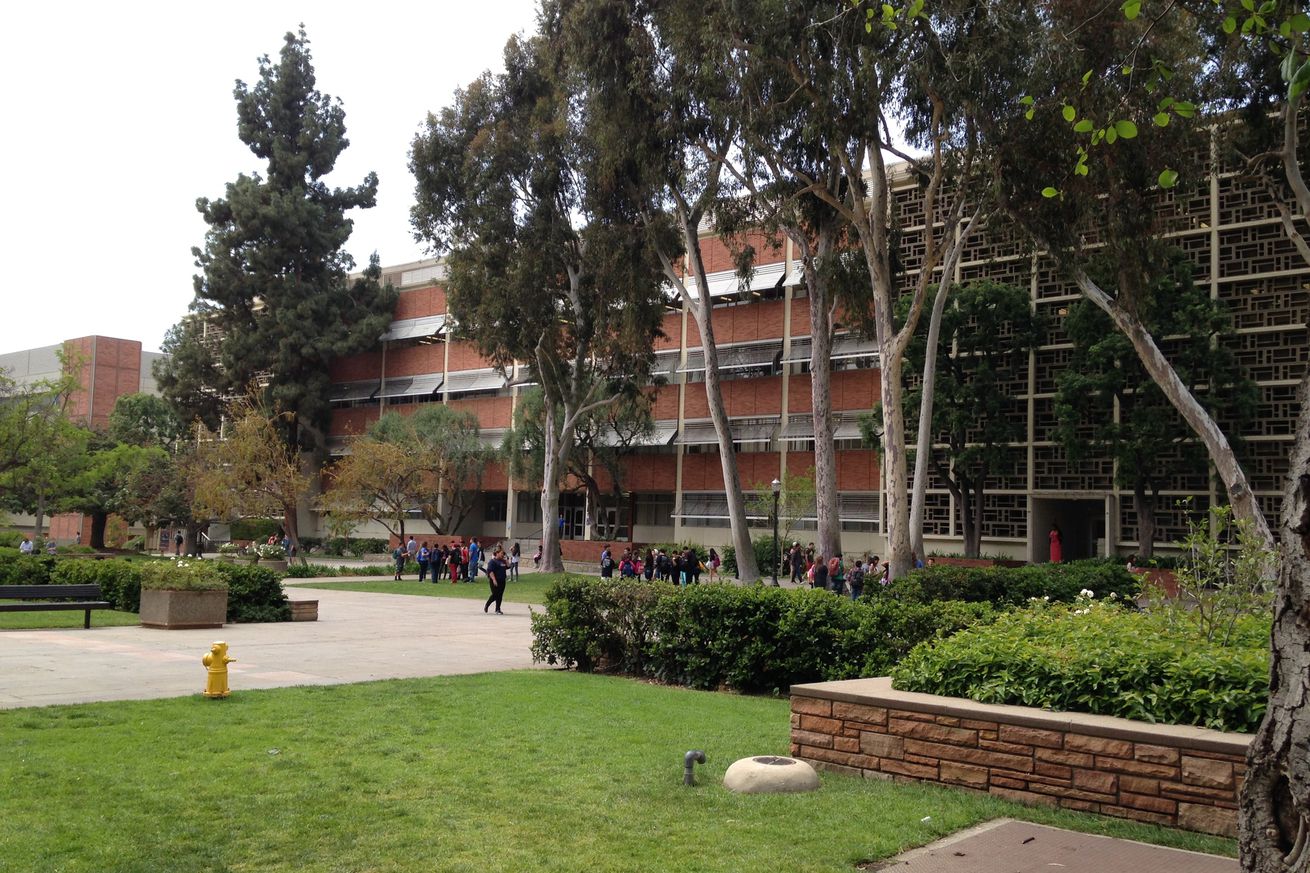

South campus is shown
on the left, while north campus is on the right.
(http://www.bruinsnation.com/2014/4/20/5631762/ucla-campus-report-size-isnt-everything-when-it-comes-to-biosensors,
http://english.cntv.cn/20110704/104639_1.shtml)
However,
I see the two cultures as being something that is perpetuated by the ways of
old. There have been many new ideas and innovations since Snow’s lecture in
1959 and UCLA’s opening of its Westwood campus in 1929. Nowadays, the two
intellectual groups are merging into the “third culture” as Snow had predicted
in his book The Two Cultures: A Second
Look. One example in my major is a microcontroller called Lilypad. This microcontroller not only
resembles a flower, but it also uses conductive thread instead of wires,
allowing the creation of new wearable and artistic products. This is just one
of many examples showing how engineering and design are already intertwined.

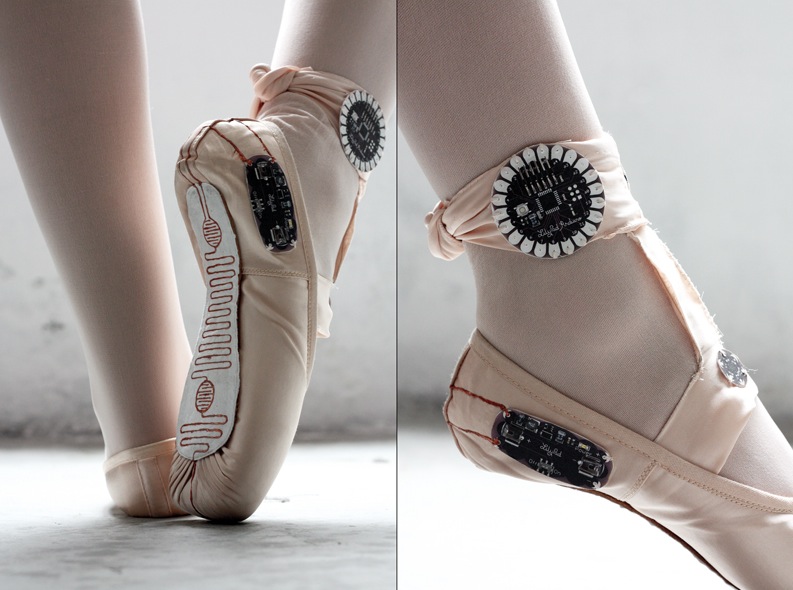
The Lilypad fuses
together engineering with design.
(http://clemenswinkler.com/skin/?tag=arduino-lillypad,
https://blog.arduino.cc/2014/11/05/e-traces-creates-visual-sensations-from-ballerinas/#more-10470)
Personally, I am interested in
electrical engineering involved with biotechnology such as electronic
prosthetics. These prosthetic body parts are another great example illustrating
the emergence of a third culture. Even though the technical components to these
products are important, the design and look are also necessary for the
consumer’s self-confidence and overall interest.

Japanese engineers
from exiii try to create cool and affordable prosthetic arms. (http://asia.nikkei.com/Tech-Science/Tech/Japanese-start-up-revolutionizing-electronic-prosthetic-arms)
Like
Vesna, I do not entirely agree with Brockman’s claim that scientists “are
taking the place of the traditional intellectual”. Instead, with greater
technological advancements, the roles of the two cultures are being redefined.
The scientist may come up with the initial innovation, but the artists are the
ones making the product marketable for the consumers. Thus, the relationship
between science and arts is becoming more symbiotic than ever before. Although
the divide still persists at places such as UCLA, I believe that upcoming
generations will continue to bridge this gap of misunderstanding.
Sources:
Achilles.
South Campus. SB Nation. Vox Media, 20 Apr. 2014. Photograph. 23 June 2016. <http://www.bruinsnation.com/2014/4/20/5631762/ucla-campus-report-size-isnt-everything-when-it-comes-to-biosensors>.
Arduino.
By Zoe Romano. Arduino, 5 Nov. 2014. Photograph. 23 June 2016.
<https://blog.arduino.cc/2014/11/05/e-traces-creates-visual-sensations-from-ballerinas/#more- 10470>Brockman, John. "The Third Culture." Edge. Edge Foundation, 1991. Web. 23 June 2016. <https://www.edge.org/conversation/the-emerging>.
CCTV.
CCTV, 4 July 2011. Photograph. 23 June 2016 <http://english.cntv.cn/20110704/104639_1.shtml>
Clemens Winkler. By Clemens Winkler. 28 Feb. 2008. Photograph. 23 June 2016.
<http://clemenswinkler.com/skin/?tag=arduino-lillypad>
Graham-Rowe,
Duncan. "John Brockman: Matchmaking with Art and Science." Wired. 3
Feb. 2011. Web. 23 June 2016. <
http://www.wired.co.uk/article/matchmaking-with-science-and-art>.
"History." UCLA. Web. 23 June 2016. <http://www.ucla.edu/about/history>
Nikkei Asian Review. By Masahiro Kamijo. Nikkei Inc., 13 Oct. 2015. Photograph. 23 June 2016. <http://asia.nikkei.com/Tech-Science/Tech/Japanese-start-up-revolutionizing-electronic- prosthetic-arms>
Snow, Charles P. The Two Cultures and the Scientific Revolution. New York: Cambridge UP, 1959. Print.
StoryAlity.
By JT Velikovsky. 11 Dec. 2012. Photograph. 23 June 2016. <https://storyality.wordpress.com/2012/12/11/storyality-14b-creativity-the-missing-link-between-the-two-cultures/>
Vesna, Victoria.
"Two Cultures: Part 1." YouTube. uconlineprogram. Web.
23 June 2016. <https://www.youtube.com/watch?v=VNI7dF3DIAM>.
Vesna, Victoria. "Two Cultures: Part 3." YouTube. uconlineprogram. Web. 23 June 2016. <https://www.youtube.com/watch?v=4FOEuxrwxd0>.
Vesna, Victoria.
“Toward a Third Culture: Being in Between.” Leonardo
34.2 (2001): 121-25. Web. 23 June 2016.
Subscribe to:
Posts (Atom)