Saturday, July 16, 2016

Week 4: Neuroscience + Art

               The brain is associated with everything related to art and science. Looking back at previous topics, it is really the brain that creates unconscious stereotypes of others or acts as the model for artificial intelligence. Unlocking the many mysteries of the brain pushes the realm of art and science beyond one's wildest dreams.


Salvador Dali, Park West Gallery
Salvador Dali's Dream Caused by the Flight of a Bee around a Pomegranate a Second Before Awakening (1944) is one of many works that has ties to Freudian theory[1].


               Speaking of dreams, the influence of Freud’s psychoanalysis does play a pivotal role in the study of the mind in art and culture. His methods are archaic by today’s standards. Jung is even right to say that Freud focused too much on sexuality with ideas such as the Oedipus complex[1][2]. However, Freud is the one who really popularized the dream and the mind in society. He has brought many scientists to look inward instead of outward, and he has inspired the works for many Surrealist artists such as Salvador Dali[3]. Even nowadays, his presence can be found in the critically acclaimed movie Inception by Christopher Nolan. This movie largely plays around with the ideas of unconscious desires and symbolism in dreams. Despite his influence, Freud's ideas of dreams are merely interpretations of thoughts, which do not say much about the brain itself.  


The movie Inception was hugely based on Freudian ideas about the unconscious[2].


               Instead of dreams, there are some who believe that certain drugs are the key to liberating the mind. Lysergic Acid Diethylamide (LSD) created by Albert Hofmann is a popular choice for its hallucinogenic effects[4]. Based on a 1950’s government experiment, one artist known as whatafinethrowaway took 0.2 milligrams of LSD to create beautiful, yet haunting self-portraits[5]. These results show how the drug can breed a new type of creativity in a person by altering the mind. While this might be considered a positive for the drug’s use, it is overall highly dangerous from the government level to the public one. The government’s MK Ultra Project attempted to experiment with mind control using LSD, which resulted in many suicides[4]. On the other hand, the 2012 horror of Rudy Eugene eating off another man’s face was also caused by LSD ingestion[6]. As these instances show, drugs like LSD are not the ideal ways to discover more about the brain due to their serious consequences.


A video of the women's self-portraits after taking LSD[3]. 


               If dreams and drugs are not the answers to unlocking the secrets of the brain, what is? The answer really lies in neuroscience. Neuroscience is leading the charge to create new mind-blowing projects for artists and scientist alike. A great example can be found in Brainbow, a project in which neurons are colored with various fluorescent proteins[7]. The images look breathtaking, and they are colorful forms of artistry. At the same time, they show the many inner-workings of the brain that cannot be seen through dreams or LSD. In the end, it is truly neuroscience that has the ability to benefit both art and science. 


A picture of the hippocampus and cortex using Brainbow technology[4]. 


Sources:

1. Vesna, Victoria. "Neuroscience and Art Part 2: Unconscious Mind/Dreams." YouTube. uconlineprogram, 17 May 2012. Web. 15 July 2016. <https://www.youtube.com/watch?v=TFv4owX3MZo>.

2. Editors of Encyclopædia Britannica. "Oedipus Complex." Encyclopædia Britannica. Encyclopædia Britannica Inc., n.d. Web. 16 July 2016. <https://www.britannica.com/topic/Oedipus-complex>.

3. "Freud’s Influence on Dali’s Surreal “Dream” Painting." Park West Gallery. Park West Gallery, n.d. Web. 16 July 2016. <https://www.parkwestgallery.com/freuds-influence-on-dalis-surreal-dream-painting/8948>.

4. Vesna, Victoria. "Neuroscience and Art Part 3: NeuroChemicals." YouTube. uconlineprogram, 16 May 2012. Web. 15 July 2016. <https://www.youtube.com/watch?v=E5EX75xoBJ0>.

5. James, Emily. "Art on Acid: Illustrator Takes LSD before Spending NINE HOURS Drawing a Series of Increasingly-abstract Self-portraits to Demonstrate the Drug's Effect on Her Brain." DailyMail.com. Associated Newspapers Ltd, 1 Sept. 2015. Web. 16 July 2016. <http://www.dailymail.co.uk/femail/article-3217307/Art-acid-Illustrator-takes-LSD-spending-NINE-HOURS-drawing-series-increasingly-abstract-self-portraits-demonstrate-drug-s-effect-brain.html>.

6. Show, Cristine, and Louise Boyle. "First Picture: The Naked Man Who Ate the Face off Victim in Horror Attack While High on LSD before Being Shot Dead by Police." DailyMail.com. Associated Newspapers Ltd, 28 May 2012. Web. 16 July 2016. <http://www.dailymail.co.uk/news/article-2151098/Rudy-Eugene-Naked-man-eats-face-victim-high-LSD-police-shoot-Miami.html>.

7. Vesna, Victoria. "Neuroscience and Art Part 1: Consciousness/Memory." YouTube. uconlineprogram, 17 May 2012. Web. 15 July 2016. <https://www.youtube.com/watch?v=TzXjNbKDkYI>.


Images/Videos:

1. Dali, Salvador. Dream Caused by the Flight of a Bee around a Pomegranate a Second Before Awakening. 1944. Park West Gallery, Thyssen-Bornemisza Museum, Madrid. Park West Gallery. Park West Gallery. Web. 16 July 2016. <https://www.parkwestgallery.com/freuds-influence-on-dalis-surreal-dream-painting/8948>.

2. 7 Layers of Inception. Digital image. THiNC. THiNC, 10 July 2010. Web. 16 July 2016. <http://taylorholmes.com/2010/07/20/7-layers-of-inception/>.

3. A Woman's Self Portrait before and after LSD. Perf. Whatafinethrowaway. YouTube. Troplr, 12 Aug. 2015. Web. 16 July 2016. <https://www.youtube.com/watch?v=76yemnRduCA>.

4. Lichtman, Jeff. Hippocampus and Cortex. 2007. Center for Brain Science. Center for Brain Science at Harvard University. Web. 16 July 2016. <http://cbs.fas.harvard.edu/science/connectome-project/brainbow#>.

Wednesday, July 13, 2016

Week 4: BioTech + Art

               Based on the lectures, there seems to be a large amount of controversy associated with bioart. In particular, genetic engineering poses a huge dilemma on whether tampering with life’s code is being taken too far.

               When looking at an artist such as Eduardo Kac, there is some legitimacy to the claims that his fluorescent bunny does not serve much purpose. Although he tries to validate his art by saying how it creates a dialogue between professionals and the public on genetic engineering[1], the work still borders on being unethical since he did it just for the sake of art without much consideration for the bunny’s well-being. Moreover, the idea was not anything new since Japanese researchers did the same process for lab rats several years earlier[1]. If anything, this work makes it seem acceptable for the public to use transgenic art on other pets and animals.


ALBA
A picture of Eduardo Kac and his "GFP" bunny Alba[1]. 


               Kac is not the only offender of using genetic engineering to create controversy. Many big corporations are putting genetically modified organisms in their crops, which are starting to show its negative effects in recent years. In fact, studies show that there are already 18 million Americans who suffer from gluten insensitivity due to wheat hybridization and GMOs[2]. When greed and selfishness enter into biology, the outcomes can be harmful to many people. The well-being of others is not worth the cost of a genetically modified piece of corn.


A cartoon illustrating the unnatural effects of GMOs in food[2].


               Conversely, there are those who are actually making a positive impact through bioart and bioengineering. Artist Kathy High took retired lab breeder rats in an effort to make them feel healthy again by playing with them, feeding them, and cleaning them[3][4]. Her use of empathy for the rats makes her art seem much more altruistic compared to that of Kac. This is the type of bioart that many artists should aspire to: one that can be beneficial to someone or something.


Photographs of the breeder rats (left and right) and the facility used to take care of them (center)[3].


               Furthermore, a positive display of bioengineering comes from Anthony Atala’s group that grows human organs by using cells in the person’s body[5]. These intricate structures are almost like art pieces because they are carefully designed and crafted with technology. On the other hand, their work is also helping and saving lives in the process. Overall, this group is using the power of bioengineering to do some actual good in the world. The only controversial part about their studies is that there are not enough of them around.


A picture of a bladder structure being coated with cells[4].


               In order to end controversy, one simple remedy might be to use bioart and bioengineering in a way that can be helpful to either humans or nature. This is the reason why the latter examples of High and Atala are surrounded with little to no controversy. They are the artists and scientists who understand that life in art and science must be done with a lot of care and consideration. 


Sources:

1. Vesna, Victoria. "Biotechnology Part 1." YouTube. uconlineprogram, 18 Sept. 2013. Web. 13 July 2016. <https://www.youtube.com/watch?v=PaThVnA1kyg>.

2. Sarich, Cristina. "18 Million Americans Suffer from GMO and Gluten Intolerance." Natural Society. Natural Society, 8 July 2014. Web. 13 July 2016. <http://naturalsociety.com/18-million-americans-suffer-gmo-gluten-intolerance/>.

3. High, Kathy. "Rat Care Manual." Embracing Animal. N.d. Web. 13 July 2016. <http://www.embracinganimal.com/ratcare.html>.

4.  Vesna, Victoria. "Biotechnology Part 3." YouTube. uconlineprogram, 17 May. 2012. Web. 13 July 2016. <https://www.youtube.com/watch?v=3EpD3np1S2g>.

5. Atala, Anthony. "Anthony Atala: Growing New Organs." TEDMED. TED. TEDMED, Oct. 2009. Web. 13 July 2016. <https://www.ted.com/talks/anthony_atala_growing_organs_engineering_tissue#t-6010>.

6. Pollan, Michael. "POV | Food, Inc. | Interview with Michael Pollan | PBS." Interview. YouTube. PBS, 16 Apr. 2010. Web. 13 July 2016. <https://www.youtube.com/watch?v=0Ty0eehT8Y4>.


Images:

1. Alba. N.d. Potopov. By Potopov. 5 Nov. 2015. Web. 13 July 2016. <http://potopov.com/blog/index.php?tag/references>.

2. "Best to Avoid GMO's and Go Organic..." Pinterest. Pinterest, n.d. Web. 13 July 2016. <https://www.pinterest.com/peace4meman/hell-no-gmos-and-all-that-other-nastiness/>.

3. Embracing Animal. N.d. Kathy High. By Kathy High. Web. 13 July 2016. <http://kathyhigh.com/project-embracing-animal.html>.

4. Anthony Atala: Growing New Organs. N.d. TED. By Anthony Atala. TEDMED, Oct. 2009. Web. 13 July 2016. <https://www.ted.com/talks/anthony_atala_growing_organs_engineering_tissue#t-6010>.

Monday, July 11, 2016

Event 1: LACMA

               This past week, I went to visit the Los Angeles County Museum of Art (LACMA) for the first time. I was expecting to see mostly traditional art. However, LACMA surpassed my expectations by intertwining art and science together into one cohesive medium. This museum seemed to be the epitome of the third culture recognized by Snow in his essay The Two Cultures: A Second Look (1963)1.

               While there were many impressive pieces, the first one that stood out to me was The Egg (1963) in the featured gallery by Agnes Martin. The piece is pretty self-explanatory since it is just a drawing of an egg with lines cutting it horizontally. However, when looking at the sketch she made beforehand, there seemed to have golden ratio within the egg’s design. Possibly, it was my brain overreacting to what I have seen during lecture. Nevertheless, my friend and I did try to guess and calculate to see if my suspicions were true.  Although it was almost impossible to verify without a ruler, this work beautifully illustrated the ideas of math and geometry behind art that are usually overlooked.   


Images of the sketch (left) and the final draft (right) for The Egg by Agnes Martin1.


               Another remarkable work that I came across was Metropolis II (2011) by Chris Burden. The huge display of toy cars and buses swirling around this model city brought me back to my own childhood when I used to play with Hot Wheels. Moreover, though, it was reminiscent to Flippo Marinetti’s Futurist Manifesto, which talked about speed and acceleration being products of beauty2. The motion of the cars and buses mixed with the motorized sounds was chaotic, yet at the same time, it was mesmerizing to watch. Every angle and glance brought something different and new. By implementing technology such as DC motors and magnets, this work really captured the essence of a city lifestyle.


A video of Chris Burden's Metropolis II is on the left, while a picture of me next to the exhibit is on the right2.


               The final artwork to be discussed was Michael Eden’s Innovo Vase (2016). This one was interesting in the fact that it not only blended art and science together, but it also combined traditional and contemporary art as well. Basically, Eden’s design was based on the Stowe Vase that had been reconstructed in 1774. However, instead of copying the vase completely, Eden used 3D printing to etch the illustrations from the older version. Thus, he reinvented how the vase looked using modern technology. It reminded me of the lectures on robotics and industrialism in art. Unlike Walter Benjamin’s views of technology destroying the art’s “aura”3, though, this work has its own unique personality by being a culmination of traditional art forms and recent technological innovations.


These are photographs showing the Innovo Vase (top left)3 and the Stowe Vase (top right)4. The bottom images showcase some of the process for creating the Innovo Vase.


               Looking back, this course seemed to enhance my experience at LACMA. It was really neat to physically see how science and math is being used to break new ground for art. It also allowed me to notice how the gap between art and science is diminishing drastically as the years go by. Overall, I was able to make connections to the art that I would have never made prior to taking this class. 


Sources:

1. Vesna, Victoria. “Toward a Third Culture: Being in Between.” Leonardo 34.2 (2001): 121-25. Web. 11 July 2016.

2. Vesna, Victoria. "Robotics Part 1." YouTube. uconlineprogram, 15 Apr. 2012. Web. 11 July 2016. <https://www.youtube.com/watch?v=cRw9_v6w0ew>.

3. Benjamin, Walter. The Work of Art in the Age of Mechanical Reproduction. N.p.: n.p., n.d. Print.


Artwork:

1. Martin, Agnes. The Egg. 1963. The Elkon Gallery, LACMA, Los Angeles.

2. Burden, Chris. Metropolis II. 2011. The Nicolas Berggruen Charitable Foundation, LACMA, Los Angeles.

3. Eden, Michael. Innovo Vase. 2016. LACMA, Los Angeles.      

4. Stowe Vase. 1774. William Randolph Hearst Collection, LACMA, Los Angeles.    

Saturday, July 2, 2016

Week 2: MedTech + Art

               When mixed with medical technology, art seems to have a much more personal effect with the body and self. A person looking at an abstract painting may feel some connection to the shapes and lines being shown. However, the experience is substantially different when the art is affecting a person physically. 


The inside of a head from one of the Body World exhibits (4).


               In my own personal experience, I saw the exhibition of Body Worlds when it came to the Bay Area several years ago. The art was surreal since the gallery was using actual bodies through plastination. Even though it was not necessarily me surrounded by glass and watchful eyes, it made me reflect on my own body and what my internal self really looks like. In many ways, it was similar to Casini’s idea of looking into a mirror. Although he was talking about MRIs, the same concept can be applied here. In my mind, I was taking that image of the person and seeing my own self in that body. 


The process of the plastination technique used for the Body Worlds exhibit (1).


               This idea of the self in association to medical technology and art also explains why many people hid their faces during Orlan’s live surgeries during the 1990’s. A woman in the documentary comments on how the audience reacted with horror to the performance even though they see and hear about so much violence on television. The experience is different, though, because many people are imagining themselves in Orlan’s situation and reacting to her face being sliced open. This phenomena is typically known as pain empathy (3), and the effects can be found in many recent movies such as 127 Hours (5). Most likely, this feeling is found in art with medical technology due to the fact that the body is a commonly used medium in this art form.


This is a photograph of Orlan during one of her live surgeries (3).


               By bringing this type of self-reflection into art, medical technology can also be beneficial to a person. Diane Gromala uses virtual reality to treat pain by having the environments react to a person’s responses, while Virgil Wong creates apps to show one’s digital persona in the future in order to curb bad habits. In both cases, people are changing themselves for the better based on a visual stimulus. These technologies are again acting like mirrors for the users with the stimuli representing the people themselves. 


Virgil Wong is creating a digital persona to show a person's age based on health characteristics (2).


               Through these observations, medical technology appears to be bringing the art world closer to one’s own identity.


Sources:

1. Casini, Silvia. Magnetic Resonance Imaging (MRI) as MIrror and Portrait: MRI Configurations between Science and the Arts. N.p.: Johns Hopkins UP and the Society for Literature and Science, 2011. Print.

2. Gromala, Diane. "TEDxAmericanRiviera - Diane Gromala - Curative Powers of Wet, Raw Beauty." TEDxAmericanRiviera. YouTube. TEDx Talks, 7 Dec. 2011. Web. 1 July 2016.

3. Inglis-Arkell, Esther. "This Is How You Literally Feel Other People's Pain." io9. Gizmodo, 11 July 2014. Web. 2 July 2016. <http://io9.gizmodo.com/this-is-how-you-literally-feel-other-peoples-pain-1603076553>.

4. Orlan - Carnal Art (2001). Dir. Stephan Oriach. Perf. Orlan. YouTube. Myriapodus Films, 13 Mar. 2011. Web. 1 July 2016. <https://www.youtube.com/watch?v=no_66MGu0Oo>.

5. Rossen, Jake. "7 Movies That Sent People Running Out of Theaters." Mental Floss. Mental Floss Inc., 2 Oct. 2015. Web. 2 July 2016. <http://mentalfloss.com/article/69377/7-movies-sent-people-running-out-theaters>.

6. TEDxAmericanRiviera - Diane Gromala - Curative Powers of Wet, Raw Beauty. Perf. Diane Gromala. YouTube. TEDx Talks, 7 Dec. 2011. Web. 1 July 2016. <https://www.youtube.com/watch?v=cRdarMz--Pw>.

7. Vesna, Victoria. "Medicine Part 1." YouTube. uconlineprogram, 21 Apr. 2012. Web. 1 July 2016. <https://www.youtube.com/watch?v=Ep0M2bOM9Tk>.

8. Vesna, Victoria. "Medicine Part 3." YouTube. uconlineprogram, 22 Apr. 2012. Web. 1 July 2016. <https://www.youtube.com/watch?v=FIX-9mXd3Y4>.

9. Virgil. Virgil Wong, n.d. Web. 2 July 2016. < http://virgilwong.com/>.


Images/Videos:

1. BODY WORLDS - The Plastination Technique. YouTube. Body Worlds, 27 Aug. 2013. Web. 2 July 2016. <https://www.youtube.com/watch?v=Q_8ZEW2CGKo>.

2. Digital image. Virgil. Virgil Wong, n.d. Web. 2 July 2016. <http://virgilwong.com/research/>.

3. N.d. English 114EM: Women Writers, 1650-1760. By Denee Pescarmona. 2003. Web. 2 July 2016.
<http://oldsite.english.ucsb.edu/faculty/ecook/courses/eng114em/surgeries.htm>.

4. N.d. Pinterest. Pinterest. Web. 2 July 2016. <https://www.pinterest.com/valeanette/gunther-von-hagensbody-worlds/>.

Thursday, June 30, 2016

Week 2: Robotics + Art

               It cannot be argued that industrialization has changed the way that art is viewed and formed. From computers to robots, the way art is viewed today is not like how it was viewed a hundred, fifty, or even ten years ago. However, there are those such as Walter Benjamin who believe that art is losing its so-called “aura”, tradition, and uniqueness from these new advances (1). Although mass production has caused the traditional aspect to decline somewhat, it does not mean that this new age of art has loss anything special. Instead, it is just evolving like everything else in life.


The changing paradigm of art from traditional to digital (1).


               Film is one way in which art has evolved. Duhamel has criticized movies as “a spectacle which requires no concentration and presupposes no intelligence” (1), but he seems to forget one critical element of art: emotion. Art may want people to think; however, it really wants them to feel as well. There are even studies from functional MRIs that show art eliciting emotions (2). Whether it be through thought or emotion, art is supposed to be something impressionable that people can take with them. Films do that in their very own way.


Films can elicit emotions similar to that of traditional art (2). 


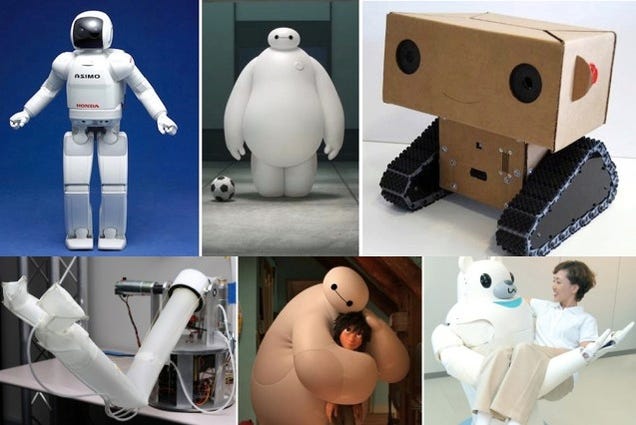
               A great example that mixes the concepts of emotion, art, robotics, and film together is Disney’s Big Hero 6 (2015). It has both a touching story along with an innovative robot design found in Baymax. In fact, people working on the movie mainly based Baymax’s design on a developing technology called soft robotics at Carnegie Mellon University (4). By showing these new technologies through animation, this film is bringing robots and art even closer together. Much akin to Professor Kusahara’s description of a friendly humanoid robot, Baymax also shows a positive side to robots that is typically found in Japanese culture. In many respects, this viewpoint is displaying the pros of industrialization and robotics rather than the cons found in earlier movies like Fritz Lang’s Metropolis (1927). Despite what critics say, Big Hero 6 is art by captivating the audience’s hearts with the story and their imaginations with the robots.


Baymax from Big Hero 6 was inspired by actual robot designs and concepts (3).


               Even though art is evolving, it is not replacing traditional art entirely. To this day, many people “still bid wildly at auctions and employ armies of scholars to find the ‘original’,” (3). Art tends to utilize computer-generated animations or robots nowadays, but it is still considered art as long as it can convey meaning to the audience. 


Sources:

1. Benjamin, Walter. The Work of Art in the Age of Mechanical Reproduction. N.p.: n.p., 1936 Print.

2. Clark, Josh. "Why Do Music and Art Move Us?" How Stuff Works. InfoSpace LLC, 13 Sept. 2010. Web. 30 June 2016. <http://science.howstuffworks.com/life/music-and-art-move-us1.htm>.

3. Davis, Douglas. “The Work of Art in the Age of Digital Reproduction (An Evolving Thesis: 1991-1995).” Leonardo 28.5 (1995): 381-386. Web. 29 June 2016.

4. Davis, Lauren. "How Disney Will Make You Cry Again With Big Hero 6." io9. Gizmodo, 3 Sept. 2014. Web. 29 June 2016. <http://io9.gizmodo.com/how-disney-will-make-you-cry-again-with-big-hero-6-1630115219>. 

5. Kusahara, Machiko. "Robotics Machiko Kusahara 1." YouTube. uconlineprogram, 14 Apr. 2012. Web. 29 June 2016. < https://www.youtube.com/watch?v=xQZ_sy-mdEU>.

6. Vesna, Victoria. "Robotics Part 2." YouTube. uconlineprogram, 15 Apr. 2012. Web. 29 June 2016. <https://www.youtube.com/watch?v=oAZ8bo9T_Pk>.


Images:

1. Kevin. Traditional-art vs Digital-art. Digital image. Deviant Art. Deviant Art, n.d. Web. 30 June 2016. < http://chukadrawer.deviantart.com/art/traditional-art-vs-digital-art-181779589>.

2. N.d. Today. By A. Pawlowski. NBC News, 2 Nov. 2014. Web. 30 June 2016. <http://www.today.com/health/your-brain-movies-why-films-make-us-cry-flinch-cheer-1D80258284>

3. Walker, Alissa. Robots that Inspired Big Hero 6. Digital image. Gizmodo. Gizmodo, 6 Nov. 2014. Web. 30 June 2016. <http://gizmodo.com/8-real-life-robots-that-inspired-big-hero-6-1643663925>.

Sunday, June 26, 2016

Week 1: Math + Art

               Although science is largely based off of mathematics, art is typically not associated with math in the same way. However, as this week has shown, math and art are much more connected than I had previously thought.

              Take the golden ratio for example. This mathematical concept has played a major role in architectural achievements such as the Parthenon and the pyramids of Giza. Moreover, it can be found in nature. Most notable examples include shells or plants, but it can also be seen in the small structures of DNA and in the vast spiral galaxies of the universe. With the discovery of this ratio, artists had the ability to use this harmony found from nature and math in their own works.


These are a few natural examples that illustrate the golden ratio. 
(http://memolition.com/2014/07/17/examples-of-the-golden-ratio-you-can-find-in-nature/)


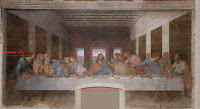
            Often times, math helps to shape the way artists perceive their world. For instance, before al-Haytham’s Book of Optics, art was drawn flat without much depth. However, the introduction of the vanishing point caused a new renaissance of art being more realistic, three-dimensional, and detailed. Leonardo’s Da Vinci’s The Last Supper illustrates this point by making the painting feel lifelike. The use of vanishing point enhances the focus of Jesus at the center. The Last Supper is also an important piece for its use of golden ratio, creating the natural harmony as noted earlier. It is iconic as it is fundamental in showing how natural elements and mathematics can be used to improve what the artist wants to convey.


    Da Vinci Last Supper showing golden ratio or phi proportions
     Da Vinci's The Last Supper uses both the golden ratio and the vanishing point.
(http://www.artmumble.com/2012/02/single-vanishing-point-in-leonardo-da.html, http://www.goldennumber.net/art-composition-design/)


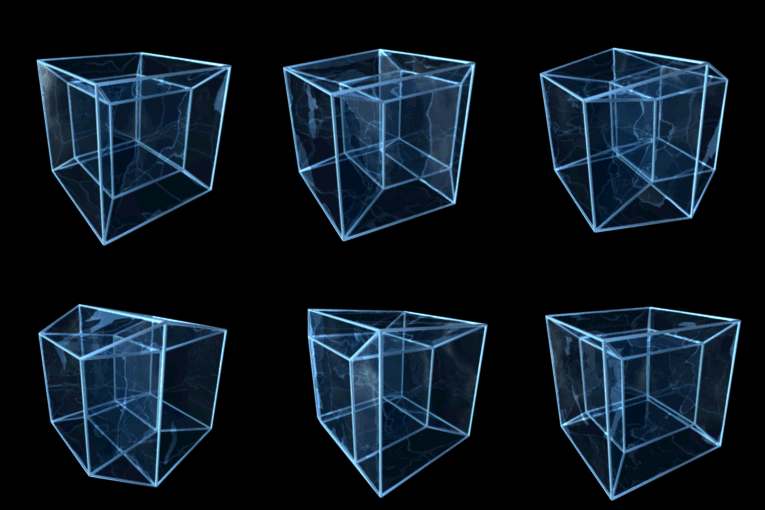
             Beyond 2D and 3D perspective, math has also helped to explain the fourth dimension. As Abbott’s Flatlands shows, the fourth dimension can be argued by “the Argument of Analogy of Figures”. Even if it cannot be seen in the real world, it can be imagined in a metaphysical one. This idea would eventually find a scientific answer in Einsteinian relativity to create “four-dimensional images of an intricacy and accuracy never dreamed of” (Henderson), but this by no means made the artists’ contribution insignificant. Just the thought of the fourth dimension helped to shape new forms of art like cubism.


An example of what the fourth dimension looks like using computers. 
(https://en.wikipedia.org/wiki/Tesseract)


            Alone, math is just a set of numbers and calculations. However, it has become an essential tool for the arts and the sciences. Without it, art and science would be stagnate and unchanging. In the end, I realize that math improves these two disciplines to constantly reach new heights by finding hidden meanings within the world. 


Sources:

Abbott, Edwin A. Flatland: A Romance of Many Dimensions. 1884. Print.

Da Vinci, Leonardo. The Last Supper. 1495-1498. ArtMumble.com. 13 Mar. 2012. Painting. 25 June 2016. <http://www.artmumble.com/2012/02/single-vanishing-point-in-leonardo-da.html>.

"Examples of the Golden Ratio You Can Find in Nature." Memolition. 2014. Web. 25 June 2016.                     <http://memolition.com/2014/07/17/examples-of-the-golden-ratio-you-can-find-in-nature/>.

Frantz, Marc. Lesson 3: Vanishing Points and Looking at Art. 2000. Print.

Henderson, Lynda. “The Fourth Dimension and Non-Euclidean Geometry in Modern Art.” Leonardo            17.3 (1984): 205-210. Web. 25 June 2016.

Meisner, Gary. "Golden Ratio in Art Composition and Design." Phi 1.618: The Golden Number. 4       May 2014. Web. 24 June 2016. < http://www.goldennumber.net/art-composition-design/>. 

Tesseract. Digital image. Wikipedia. Wikimedia Foundation. Web. 26 June 2016. <https://en.wikipedia.org/wiki/Tesseract>.

Vesna, Victoria. "Mathematics: Zero, Perspective, Golden Mean." YouTube. uconlineprogram. Lecture. 24 June 2016. <https://www.youtube.com/watch?v=mMmq5B1LKDg>